
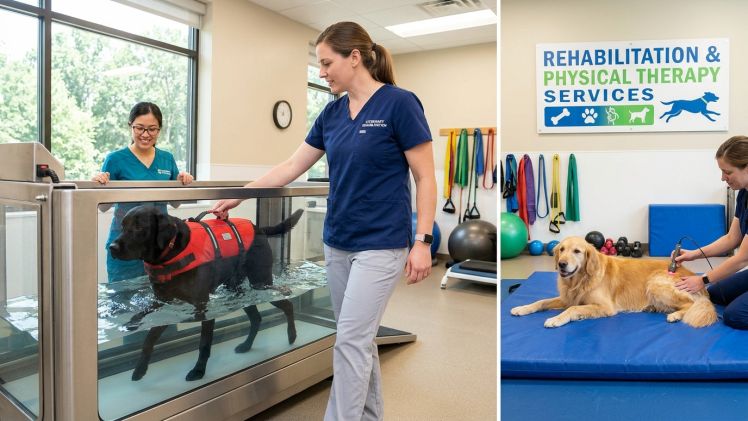
When your pet is limping, weak after surgery, or moving like something just is not right, the worry sets in fast. You watch them hesitate before standing up, struggle with stairs, or stop doing the simple things they used to love, and suddenly every step looks loaded with meaning. That is usually when people start hearing terms like rehabilitation, physical therapy, laser treatment, underwater treadmill, or home exercise plans at an animal hospital in Durham NC, and it can feel like a lot at once.
The short version is simple. How Veterinary Hospitals Manage Rehabilitation And Physical Therapy comes down to a structured plan built around pain control, safe movement, strength, and function. A veterinary hospital does not treat rehab as a vague add on. It is usually handled as a medical service with an exam, goals, regular progress checks, and changes based on how your pet responds.
Veterinary rehabilitation starts with function, pain, and daily life
A pet rarely arrives for rehab with just one issue. A dog recovering from knee surgery may also be guarding the other leg. An older cat with arthritis may have lost muscle because moving hurts. A pet with a spinal injury may need help relearning balance, not just building strength. That is why animal physical therapy in a hospital setting begins with a full look at how your pet moves, where the pain is, and what daily life actually looks like at home.
The hospital team often checks gait, joint range of motion, muscle mass, posture, neurologic function, and pain response. They also ask practical questions. Can your dog get outside without slipping. Does your cat still jump into the litter box. Can your pet rise after lying down. Those details shape the plan because rehab is not only about healing tissue. It is about getting your pet back to normal function, or as close to it as possible.
That early stage matters because rest alone can create new problems. Too little movement leads to muscle loss, stiffness, poor balance, and delayed recovery. Too much movement too soon can set healing back. Hospitals manage that tension by giving controlled exercise instead of unrestricted activity.
Veterinary hospitals use targeted therapies instead of one size fits all care
Most veterinary rehabilitation programs combine several tools, not just one. Therapeutic exercises are the core. These may include assisted standing, weight shifting, sit to stand work, balance training, leash walking plans, and stretching. The point is not to make your pet tired. The point is to teach the body to move well again.
Many hospitals also use noninvasive therapies to support healing and comfort. The University of Illinois explains how non invasive therapies in veterinary rehabilitation can help reduce pain, improve mobility, and support recovery. Depending on the case, a hospital may recommend cold or heat therapy, therapeutic ultrasound, electrical stimulation, or laser therapy.
Hydrotherapy is another common option, especially for dogs that cannot tolerate full weight bearing yet. The underwater treadmill allows movement with less joint stress while still building strength and coordination. Auburn University outlines how physical rehabilitation for small animals may include underwater treadmill work, therapeutic exercise, and pain management techniques as part of a broader treatment plan.
What if your pet hates the treadmill, or gets anxious in new settings. A good hospital adjusts. Some animals do better with mat work, slower handling, shorter sessions, or a stronger home program. Rehab is not effective because the equipment looks advanced. It works when the plan matches the pet in front of the team.
Rehabilitation plans often balance medical need, cost, and home follow through
This is where a lot of families feel stuck. You want the best care, but you also have a budget, a work schedule, and a pet who may not cooperate on command. Hospitals know that. The better programs build plans that account for what is realistic, not what looks perfect on paper.
Cost can vary based on the condition, the number of sessions, and the therapies used. Surgical recovery often needs a more structured schedule early on. Chronic arthritis may need periodic hospital visits with a steady home routine in between. Neurologic cases can take longer and change more slowly, which is emotionally hard when you are hoping for quick signs of progress.
Home follow through matters more than many people expect. A pet that gets excellent therapy once a week but spends the rest of the time slipping on floors, overdoing activity, or skipping exercises may improve more slowly than a pet with a simpler plan done consistently. Hospitals usually manage this by giving clear instructions, activity limits, and milestones to watch for.
Home care and hospital care serve different roles in pet rehabilitation
| Approach | Best Use | Benefits | Limits |
| Hospital based rehab | Post surgery recovery, neurologic injury, severe arthritis, complex pain cases | Direct supervision, specialized equipment, progress tracking, safer adjustments | Higher cost, travel time, scheduling needs |
| Home exercise program | Mild mobility issues, maintenance between visits, long term arthritis support | Lower cost, daily consistency, less stress for some pets | Technique errors, less monitoring, harder to advance safely without guidance |
| Combined plan | Most pets in recovery or long term mobility care | Balanced support, better continuity, more practical for many families | Requires owner commitment and regular communication |
The combined plan is often the sweet spot. Your pet gets skilled oversight at the hospital and steady reinforcement at home. That is usually how a pet rehabilitation program stays effective without becoming overwhelming.
Clear next steps make veterinary physical therapy easier to manage
Ask for measurable goals. Do not settle for a vague promise that rehab may help. Ask what success looks like in your pet’s case. That could mean bearing weight within two weeks, climbing stairs with less help, improving muscle mass, or reducing pain during daily walks. Measurable goals make it easier to judge progress and cost.
Get a written home plan. You need more than verbal instructions given at the end of a visit. Ask for exercise names, frequency, duration, surface recommendations, and signs that mean stop and call. Clear guidance reduces the risk of underdoing it or pushing too hard.
Track small changes. Recovery is often uneven. Keep notes on appetite, willingness to walk, ability to stand, slipping, energy, and pain medication use. Small gains are easy to miss when you see your pet every day, but they give the hospital useful information and help shape the next stage of care.
Steady rehabilitation care helps pets move with less pain and more confidence
If your pet needs rehab, you are not overreacting by taking mobility changes seriously. Loss of movement affects comfort, behavior, strength, and quality of life faster than most people expect. Good hospital based therapy brings structure to a stressful situation and gives your pet a safer path forward. Reach out to a veterinary hospital to discuss a rehabilitation evaluation and find out what kind of plan fits your pet’s condition, your schedule, and your budget.