
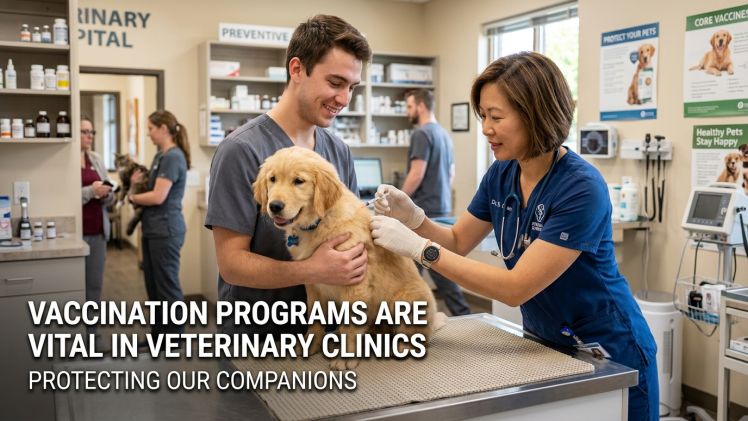
You want your pet protected, but the choices can feel confusing fast. Sarasota Veterinary can help make sense of it all: one shot now, another later, booster schedules, indoor versus outdoor risk, age, breed, travel, boarding requirements. It adds up, and when life is already busy, preventive care can slip into the category of “I’ll deal with that next month.” That delay is where small problems turn into expensive and painful ones.
Why Vaccination Programs Are Vital In Veterinary Clinics comes down to one simple truth. Vaccines help stop disease before it starts, and a structured plan inside a veterinary clinic gives your pet care that fits their age, lifestyle, and health status. A good program protects your animal, lowers the risk to other pets, and helps your clinic catch health issues early instead of reacting in a crisis.
Vaccination programs in veterinary clinics prevent avoidable illness
A vaccine is not just a single appointment. It is a schedule, a record, and a risk management plan. Puppies and kittens need a series because their immune systems are still developing. Adult pets need boosters because protection can fade over time. Senior pets may need a more tailored approach based on chronic conditions, exposure risk, and overall health.
Without that structure, it is easy to miss timing that matters. A pet may look healthy right up until they are not. Parvovirus, distemper, rabies, feline panleukopenia, and respiratory infections can move fast, and treatment often costs far more than prevention. The emotional cost is harder to measure. You are not just dealing with a bill. You are dealing with fear, guilt, missed work, isolation from other animals, and the awful feeling of wishing you had acted sooner.
Pet vaccination programs also protect the larger animal community. When more pets are vaccinated, outbreaks are less likely to spread through boarding facilities, dog parks, shelters, grooming spaces, and neighborhoods. That matters even more when public health agencies are tracking disease trends. The CDC recently reported changes in rabies postexposure prophylaxis recommendations tied to vaccine and immunoglobulin shortages, which shows how disease prevention and response can affect both human and animal health. You can review that update in the CDC report on rabies postexposure prophylaxis guidance.
Veterinary vaccine schedules reduce stress, cost, and uncertainty
Most people do not skip vaccines because they do not care. They skip because they are juggling ten things at once, or they assume an indoor pet has no meaningful risk, or they think one missed booster is no big deal. Then a boarding facility asks for proof of vaccination, or a pet has contact with a stray animal, or a respiratory illness spreads through the area, and suddenly the gap matters.
That is where a clinic based program helps. A veterinary team keeps records, sends reminders, checks for changing risk factors, and adjusts the plan when your pet’s life changes. A new puppy in the house, a move, hiking trips, dog daycare, contact with wildlife, or a health diagnosis can all shift what protection makes sense.
Public health alerts can also change how clinics think about exposure. The CDC issued a recent health advisory about rabies risks linked to animal exposures and cross border movement, which underlines why prevention cannot be treated as an afterthought. You can read the CDC health advisory on rabies exposure concerns for more context.
Animal vaccination services are also one of the few forms of care that save money by working best before anything seems wrong. Treating a severe infectious disease can mean diagnostics, hospitalization, IV fluids, isolation, medications, repeat visits, and a recovery that is not guaranteed. A scheduled vaccine visit is far simpler and far less disruptive.
Vaccination benefits and disease risks are easier to weigh side by side
| Situation | With a Clinic Vaccination Program | Without a Consistent Program |
| Puppy or kitten care | Timed series based on age and immunity needs | Missed doses can leave gaps during the highest risk stage |
| Boarding, daycare, grooming | Records are current and easy to provide | Denied entry or rushed appointments before travel |
| Exposure to sick or stray animals | Lower risk of severe illness and clearer next steps | Higher concern, emergency visits, possible quarantine |
| Long term cost | Predictable preventive spending | Higher chance of emergency treatment and isolation costs |
| Public health concerns such as rabies | Better protection for pets and people in the home | More stress, more exposure management, more uncertainty |
No medical step is completely free of risk, and your clinic should be honest about that. Some pets have mild soreness or fatigue after vaccination. A small number need closer monitoring because of age, medical history, or prior reactions. That is another reason programs inside a veterinary clinic matter. Decisions are based on your actual pet, not a generic chart pulled from the internet.
Clear steps help you protect your pet without guessing
- Gather your pet’s vaccine history. Find past records from breeders, shelters, rescues, or prior clinics. If you cannot find them, say that clearly when you schedule. Guessing creates gaps. A clean record lets the clinic build the right plan from the start.
- Update the clinic on your pet’s real life. Indoor only sounds simple, but windows, visitors, shared hallways, travel carriers, and emergency escapes all matter. Tell the clinic if your pet goes outdoors, meets other animals, travels, boards, or has contact with wildlife. Vaccine planning works best when it matches daily life.
- Put boosters on the calendar before you leave. The first visit is only part of the job. Schedule the next appointment right away, save the reminder in your phone, and ask what signs should prompt a call after vaccination. That removes the mental load later when life gets crowded again.
Preventive care in a veterinary clinic protects more than one appointment
The strongest reason vaccination programs matter is peace of mind grounded in real prevention. You are not waiting for a fever, a cough, vomiting, weakness, or an emergency room visit to tell you something is wrong. You are lowering the odds of that day happening at all. That is good medicine, and it is kinder to both pets and the people who love them.
If your pet’s records are incomplete or their shots are overdue, now is a good time to book a visit with a veterinary clinic and get a plan in place.