
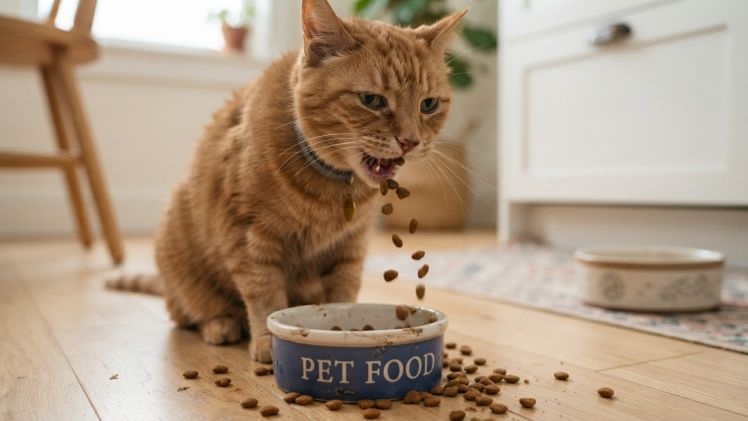
You notice it at mealtime. Your cat walks to the bowl, seems hungry, takes a bite, then pieces of food fall back out. Maybe they chew on one side, pause, lick their lips, or walk away like they want to eat but just can’t. That kind of change is upsetting because it often points to pain, not pickiness. A 4S Ranch veterinarian can help determine what’s causing the problem and how to relieve your cat’s discomfort.
When a cat starts dropping food from their mouth, the problem is usually in the mouth itself. Dental disease, broken teeth, inflammation, tooth resorption, mouth ulcers, or a mass can all make chewing hard. Sometimes the issue is trouble swallowing or jaw pain instead. The short version is simple. If your cat is dropping food, especially more than once or twice, they need a veterinary exam.
Dropping Food Often Means Your Cat’s Mouth Hurts
Cats hide pain well. By the time you see a cat dropping food while eating, there may already be a significant problem. Many cats keep showing interest in food even when eating hurts, which can make the behavior confusing. They act hungry, approach the bowl, try to chew, then stop. You might also see bad breath, drooling, pawing at the mouth, weight loss, less grooming, or a sudden preference for soft food.
One common cause is dental disease. Plaque and tartar lead to inflamed gums, loose teeth, and infection. Another major cause is tooth resorption, a painful condition where the tooth structure breaks down. Cornell’s Feline Health Center explains tooth resorption in cats as a frequent and painful problem that often requires dental X rays and treatment under anesthesia.
Severe inflammation can also make eating miserable. Some cats develop gingivostomatitis, which causes intense inflammation in the mouth and throat tissues. Texas A&M discusses feline gingivostomatitis treatment and how painful this condition can be. These cats may cry when eating, drop kibble, drool, or stop eating enough to maintain weight.
Not every case is dental, though dental pain is high on the list. A cat may also drop food because of a jaw injury, a foreign object stuck in the mouth, nausea, nerve problems, or disease affecting the throat. Older cats deserve extra attention because oral tumors become more common with age. If your cat’s face looks swollen, they bleed from the mouth, or they suddenly cannot eat, that moves from concerning to urgent.
Waiting Can Turn A Small Mouth Problem Into A Bigger One
You may be tempted to watch and wait for a few days, especially if your cat still seems interested in food. That delay can make things harder. Mouth pain tends to get worse, not better, and cats often compensate until they simply can’t. By then, they may be dehydrated, losing weight, or avoiding food altogether.
The financial side matters too. A mild dental issue caught early is often easier to treat than advanced disease that needs multiple extractions, lab work, pain control, and supportive care. There is also the daily stress of trying different foods, worrying over every meal, and wondering if your cat is being stubborn when they are actually hurting.
Cat dropping food from its mouth is one of those signs that looks small until you connect it with the rest of the picture. If meals take longer, food is scattered around the bowl, or your cat seems frustrated at feeding time, there is a reason.
Home Observation Helps, But A General Veterinarian Finds The Cause
You can learn a lot by watching your cat eat, but you cannot diagnose the problem at home. Cats with oral pain often will not let you inspect the painful area well enough to know what is going on. Even if you do look inside the mouth, many painful conditions hide below the gumline or at the tooth root. That is why a full veterinary exam matters, and why a general veterinarian may recommend sedation, dental X rays, or further testing.
| What You Notice | What It Can Mean | Why A Vet Visit Matters |
|---|---|---|
| Dropping kibble but trying to keep eating | Tooth pain, gum disease, tooth resorption | Dental exam and X rays can find hidden pain |
| Drooling, bad breath, pawing at the mouth | Inflammation, infection, oral ulcer, foreign material | Delaying care can worsen pain and reduce food intake |
| Only eating soft food or chewing on one side | Broken tooth, sore gums, jaw discomfort | The source often needs treatment, not just a diet change |
| Weight loss or hiding from the food bowl | Severe pain, systemic illness, swallowing trouble | Prompt care helps prevent dehydration and further decline |
| Bleeding, facial swelling, sudden refusal to eat | Abscess, tumor, trauma, advanced oral disease | Needs urgent veterinary attention |
Three Steps To Take Right Away When Your Cat Is Dropping Food
- Watch one meal closely and write down what you see. Note whether your cat drops dry food, wet food, or both. Watch for chewing on one side, drooling, lip licking, head shaking, bad breath, or backing away from the bowl. These details help your veterinarian narrow down the cause faster.
- Offer softer food and fresh water, but do not force home treatment. Soft food may be easier to manage for a day or two while you arrange care. Avoid trying to pry the mouth open, brushing painful teeth, or giving human pain medicine. Many common pain relievers are dangerous for cats.
- Schedule a veterinary exam soon, and treat red flags as urgent. If your cat is still eating some, book an appointment as soon as possible. If they stop eating, seem distressed, bleed from the mouth, have facial swelling, or cannot keep food in their mouth at all, seek urgent veterinary care the same day.
Getting The Right Care Early Gives Your Cat Relief Faster
Seeing your cat struggle with food is hard because meals are supposed to be simple. When they want to eat and cannot do it comfortably, something is wrong. When a cat starts dropping food from their mouth, the safest next step is to assume pain until proven otherwise and have them examined by a veterinarian.
Most causes are treatable once the source is found. Dental cleanings, extractions, pain relief, treatment for inflammation, and follow up care can make a dramatic difference in comfort and appetite. If your cat is dropping food, do not wait for it to become obvious. Reach out to a general veterinarian and get your cat the help they need.