
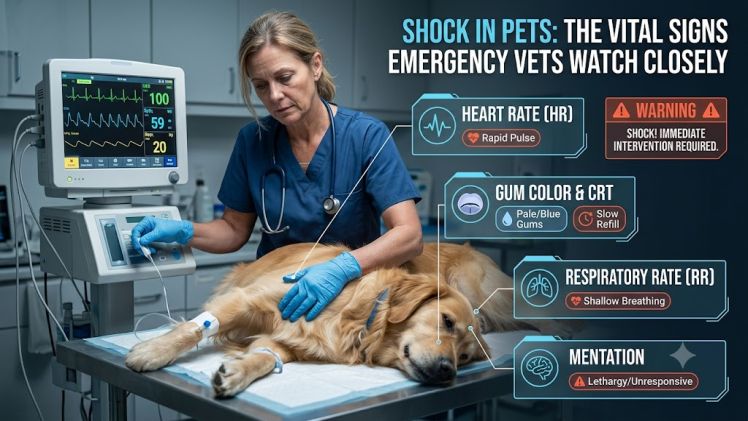
It can happen fast. One minute your dog seems tired, shaky, or just “off,” and the next you are staring at them, wondering if this is something that can wait or something that cannot. That kind of moment can make your stomach drop, because pets cannot tell you what hurts, and shock can look different from one animal to the next, which is why experienced San Diego emergency veterinarians can make all the difference.
If you are worried about shock in pets, the short answer is this. It is a medical emergency, and the signs an Emergency Vet watches most closely often include gum color, heart rate, breathing, body temperature, pulse quality, and mental state. The sooner those changes are recognized, the better the chance of getting your pet stable. You can learn more from the MSD Veterinary Manual’s overview of dog and cat emergencies.
What does shock in pets really look like when panic starts to set in?
Shock is not just fear or stress. It is a dangerous condition where the body is not getting enough blood flow and oxygen to tissues. That can happen after trauma, blood loss, heatstroke, severe infection, poisoning, allergic reactions, heart problems, or other sudden illness. Because of that, the signs are not always dramatic at first. Sometimes they are quiet, which is part of what makes this so hard.
You might notice pale gums, weakness, rapid breathing, a racing heart, cold feet or ears, confusion, collapse, or a pet that does not seem to respond like they normally would. In some cases, the gums may look bright red early on, then become pale as the condition gets worse. Cats can be even harder to read, because they often hide distress until they are very sick.
So, where does that leave you? It means trusting what you see. If your pet suddenly seems weak, unusually still, disoriented, or has trouble breathing, it is safer to treat that as urgent. Texas A&M’s guide to recognizing pet emergency signs is a helpful reference, but at the moment, your priority is getting help.
Which signs of pet shock do emergency vets check first, and why do they matter?
When a pet arrives in crisis, the team moves quickly because small changes can tell a big story. Signs of pet shock are not looked at one by one. They are read together, like pieces of a larger picture.
Gum color is one of the fastest clues. Healthy gums are usually pink. Pale, white, blue, gray, or very bright red gums can point to poor circulation or oxygen problems. Heart rate matters because the body often tries to compensate for shock by pumping faster, though some pets, especially cats, may not follow the usual pattern. Breathing rate and effort help show whether oxygen delivery is failing. Pulse quality can reveal weak circulation. Body temperature can drop as blood flow to the limbs decreases. Mental state matters too, because a pet that seems dull, glassy eyed, or collapses may be losing the ability to compensate.
This is why triage matters so much. During pet emergency care, the first goal is not always a full diagnosis. It is to protect breathing, circulation, and oxygen delivery right away. The MSD Veterinary Manual explains this early approach in its guide to initial triage and resuscitation of small animal emergency patients.
How can you tell normal stress from a true emergency in pets?
This is where many owners get stuck. A scared dog may pant. A nervous cat may hide. After exercise, a pet may breathe fast for a short time. But shock tends to involve a pattern of decline, not just a brief reaction.
If your pet is breathing hard at rest, cannot stand well, has pale or blue gums, feels cold, seems confused, or collapses, that is not something to watch for a few hours. The risk is that shock can keep moving, even if your pet has a short burst where they seem a little better. That “better” moment can give false hope.
What if your dog was hit by a car but walked back into the house? What if your cat vomited once, then hid and became limp? What if your pet had a bee sting and now seems weak and swollen? In each of those cases, shock is possible, and waiting can cost precious time.
What signs should you compare before deciding to rush to an emergency vet?
When you are under stress, it helps to focus on a few simple checkpoints. This table can help you sort what may be routine recovery from what points to a true animal shock emergency.
| What You Notice | May Be Less Urgent | Needs Emergency Vet Care Now |
|---|---|---|
| Gum color | Pink and moist | Pale, white, blue, gray, or very bright red |
| Breathing | Mild panting after activity that settles | Labored breathing, fast breathing at rest, gasping |
| Energy level | Tired but responsive | Weak, collapsed, hard to wake, confused |
| Body temperature feel | Warm body and limbs | Cold paws, ears, or body with weakness |
| Pulse and heart | Steady recovery after stress | Very fast heart rate, weak pulse, sudden decline |
| After injury or illness | Minor issue with normal behavior | Trauma, bleeding, toxin exposure, severe vomiting, allergic reaction |
What can you do right now if you think your pet is in shock?
- Check the basics without losing time.
Look at the gums, watch the breathing, and note whether your pet can stand, respond, and stay alert. If the gums are not pink, the breathing looks hard, or your pet seems weak or collapsed, treat it as an emergency.
- Keep your pet quiet and warm during transport.
Use a blanket or towel, especially if your pet feels cold, but do not overheat them. Move them gently. If there may be trauma, keep the body as still as possible. Do not offer food or water unless a veterinarian tells you to.
- Call an emergency vet while you are on the way.
Give a short, clear summary. Say what happened, when it started, what the gums look like, how the pet is breathing, and whether there was trauma, toxin exposure, or collapse. That helps the team prepare before you arrive.
When every minute feels long, what should you remember most?
If you suspect shock, you do not need a perfect explanation before you act. You just need to recognize that something is wrong and get help fast. The signs emergency vets watch closely are signs you can notice too, especially gum color, breathing, weakness, temperature, and responsiveness.
Your instinct matters here. If your pet seems suddenly fragile, distressed, or unlike themselves, seek emergency vet care right away. Quick action can make a real difference.